Research Article | | Peer-Reviewed

Sexual Behavior and Risk of STI Infections in Mozambican Military Personnel

Received: 20 April 2025     Accepted: 3 May 2025     Published: 12 June 2025
Views:       Downloads:
Abstract

Introduction: The analysis of sexual behavior and the risk of sexually transmitted infections (STIs) among military personnel involves not only understanding factors such as cultural and social norms, but also the specific aspects of the military's work environment. Studies on sexual behavior and practices that seek to better understand the exercise of sexuality within the military are extremely important as they can help guide healthy sexuality practices and develop intervention strategies to prevent and combat STIs. Aim: To analyze sexual behavior and the risks associated with sexually transmitted infections in Mozambican military personnel. Methodology: A total of 177 military personnel of both sexes took part in the study, including officers, sargent and private soldier. The sampling process was snowball type. Data was collected using the Brazilian Youth Questionnaire - Phase II Version (Dell'Aglio et al., 2011), adapted to the reality and objectives of this research, made in the googleform system and sent to the subjects, with the respective explanations and informed consent form for non-identifiable self-administration. Result: The majority of subjects had an active sex life and had been involved in at least one risky sexual practice and 14.1% showed signs or symptoms of STI infection. Risky sexual behavior had a significant association with the presence of signs of STI infection. Irregular condom use, sex for money and sex after drinking were predictors of STI infection. Conclusion: Risk sexual behavior was present in the lives of most military personnel, with greater emphasis on sex without a condom and multiple partners, which may largely explain the presence of signs or symptoms of sexually transmitted infections.

Published in Central African Journal of Public Health (Volume 11, Issue 3)
DOI 10.11648/j.cajph.20251103.12
Page(s) 102-112
Creative Commons

This is an Open Access article, distributed under the terms of the Creative Commons Attribution 4.0 International License (http://creativecommons.org/licenses/by/4.0/), which permits unrestricted use, distribution and reproduction in any medium or format, provided the original work is properly cited.

Copyright

Copyright © The Author(s), 2025. Published by Science Publishing Group

Keywords

Military, Sexual Behavior, Sexual Transmission Infection

1. Introduction
Sexuality is part of man's historical and cultural construction. It is understood as a set of human expressions and behaviors and is related to biological, psychological, social and cultural factors. It is not only related to the reproductive aspect, but also involves love and desire. However, the fact that sexuality is still a subject full of myths, taboos and prejudices means that human beings often develop risky sexual behavior as a result of a lack of adequate knowledge about their practices .
It is important that sexuality is exercised in line with adequate sexual health, which integrates the somatic, emotional, intellectual and social elements of the sexual being, by means that are positively enriching and that enhance personality, communication and love, obeying the interrelationship of the neurological, vascular and endocrinological systems, because any alteration in any of these systems can generate mismatches in the sexual response .
Studies on sexual behaviors and practices that seek to better understand the exercise of sexuality within specific population groups, such as the military, are very important, as they can help to guide individuals towards for safe and healthy sexuality, in the development of strategies, policies and intervention actions to prevent and combat sexually transmitted infections (STIs), including HIV, and unwanted pregnancies, since studies on the sexual behavior of military personnel such as report a high prevalence of risky sexual behavior for sexually transmitted infections including HIV, generally related to a reduction in regular condom use, a large number of sexual partners, the use of alcohol and drugs, following a trend in the general population, as well as high rates of sexually transmitted diseases. This, can be demonstrated by comparisons between the Canadian Armed Forces and Canadian civilian populations conducted by the Force Health Protection Directorate which revealed that among young male members (i.e. under 30 years old) of the Canadian Armed Forces, STI rates were nearly double those of their civilian peers
There are several factors that interfere with predisposition to risky sexual behavior and they are extremely dependent on the social determinants of health . In the case of military personnel, it is thought that this may be associated with the nature of their work, as they are often away from their usual sexual partners for long periods of time in order to fulfill their missions, and so they choose to seek sexual pleasure more quickly and easily, often with unknown people and without proper protection.
Among the possible consequences of a sexually active life without proper protection are pregnancy and contamination by sexually transmitted infections including HIV/AIDS, and according to the Ministry of Health , in Mozambique, sexually transmitted infections are more prevalent among young people and adults aged 25 to 49.
The military can be considered a population group highly exposed to the risk of STI infection, due to the characteristics of their work, which consists of constant transit, moving from one military position to another, passing through various cities, districts or localities. In this process, they have the opportunity to meet and socialize with many other people, including military personnel and civilians, men and women over a long period of time and sometimes even in transit, thus constituting an increased epidemiological risk for sexual practices with strangers or occasional partners, changing partners during short periods of the year, sexual practices with sex workers or for money, and unprotected sexual relations.
Given these assumptions, it becomes essential to adopt preventive measures for this group, focusing on sexual orientation that provides conditions for the military to protect themselves from STIs and/or unwanted pregnancies. And this must involve studies developed in the context of the armed forces with a view to identifying and understanding patterns of sexual behavior through research related to the topic. However, until the date of this study, no other study of this conceptual line has been carried out in Mozambique in this population group, although they are a population that may be at higher risk for StIs.
It was in this vein that the present research work was developed with the main purpose of analyzing sexual behavior and the risks associated with sexually transmitted infections in Mozambican military personnel.
2. Methodology
This is a cross-sectional descriptive study, with a quantitative approach. 177 military personnel of both sexes took part in the study, including officers, sergeants and private soldier, in normal effective service at the time of the survey. The sampling process was by snowballing, the first military received the questionnaire were asked to send to other military personnel they knew, and so on, in a process that lasted three weeks (21 days). It was also considered a judicious / purposive sampling, as only those subjects who met the inclusion criteria previously established were selected.
For data collection, were used the Brazilian Youth Questionnaire - Phase II Version (Dell'Aglio et al., 2011) , adapted according to the reality and objectives of this research. It was produced in the googleform system and sent by WhatsApp and email with the respective explanations and informed consent form for non-identifiable self-administration.
The protocol for this research was approved by the National Bioethics Committee for Health of the Ministry of Health under reference number Ref: 788/CNBS/24 of December 19, 2024.
For data analysis, the answers obtained on the Google form were exported to a database in the Excel program, where after exploratory analysis, cleaning, corrections and harmonization, the data that met the conditions for the analysis process were transferred to the SPSS statistical program version 22 where descriptive statistics were performed and association tests and the multinomial logistic regression test were also performed.
3. Results
Of the 177 military personnel who took part in the survey, 84.7% were male, 9.6% private soldier, 26.6% sergeants, 55.4% junior Officer and 8.5% senior officers, with a mean age of 34.51 ± 4.45. With regard to schooling, most of the participants (83.1%) had higher education. With regard to marital status, 24.3% said they were single, 38.4% were living in a marital relationship, 34.5% were married and 2.8% were divorced. With regard to religion, 82.5% were Christian (Table 1).
Table 1. Description of the sociodemographic characteristics of the study subjects.

Variables

subjects

%

Gender

Male

150

84.7

Female

27

15.3

Age Group (Age)

≤ 25

2

1.1

26 - 35

99

55.9

36 - 45

75

42.4

Over 45

1

0.6

Rank

private soldier

17

9.6

Sergeant

47

26.6

Junior Officer

98

55.4

Senior Officer

15

8.5

Education

Basic

-

-

Medium

30

16.9

Higher

147

83.1

Marital status

Single

43

24.3

Civil partnership

68

38.4

Married

61

34.5

Divorced

5

2.8

Religion

None

17

9.6

Christian

146

82.5

Islamic

14

7.9

Table 2 shows the description of the sexual behavior of the military personnel taking part in the survey. It shows that 97.7% said they had active sex life and that most of the subjects (62.1%) had started sex between the ages of 15 and 19, while 11.9% and 26% had started between the ages of 10 and 14 and after the age of 19 respectively.
With regard to the number of sexual partners during their lives, only 4 subjects (2.3%) had had a one partner. For the remaining categories, 27.5% said they had between 1 and 3 sexual partners, 23.2% had been sexually involved with 4 to 7 partners, 10.2% with 8 to 10 and 46.9% had more than 10 sexual partners. And in relation to the last 12 months, 43.5% said they had only had one sexual partner, 14.1% said they had had two partners, for three and four partners both categories had 10.7% of respondents, while 20.9% said they had had more than four partners in their lifetime.
For sexual orientation, only three categories were considered, heterosexual with 89.8% of participants, homosexual with 8.5% and 1.7% reported having a bisexual orientation.
With regard to risky sexual experiences in the last 12 months, 44.6% of the subjects said they had not had any of the experiences mentioned in this survey. However, the other large proportion reported had at least one of the risky sexual experiences mentioned, with 43% reporting having had sex without a condom, 5.6% after consuming alcohol or illicit drugs, 4.5% had sex for money, 2.3% had sex with a prostitute.
The use of condoms in the last sexual relationship prior to the study was mentioned by only 34.5% of the respondents. As for frequency of use, 9% said they used condoms in all their sexual relations, 71.8% in some relations and 34% never used condoms.
Of the reasons mentioned for not using condoms regularly, this sample is divided into 6.8% who don't like, 20.9% because it reduces sexual pleasure, 0.6% who are allergic, 52.5% who trust their partner, 2.3% who forget, 1.1% whose partner doesn't accept it and 7.9% because use other contraceptives.
Table 2. Description of the sexual behavior of Mozambican military personnel.

Variables

Subjects

%

Active sex life

No

4

2.3

Yes

173

97.7

Age of first sexual intercourse

Between 10 and 14 years

21

11.9

Between 15 and 19 years

110

62.1

After 19 years

46

26

Number of lifetime sexual partners

1partner

4

2.3

Between 2 and 3 partners

31

17.5

Between 4 and 7 partners

41

23.2

Between 8 and 10 partners

18

10.2

More than 10 partners

83

46.9

Number of sexual partners in the last 12 months

1 partner

77

43.5

2 partners

25

141

3 partners

19

10.7

4 partners

19

10.7

More than 4 partners

37

20.7

Current sexual orientation

Heterosexual

159

89.8

Homosexual

15

8.5

Bisexual

3

1.7

Type of risky sexual experience in the last 12 months

None

79

44.6

Sex with a prostitute

4

2.3

Sex in exchange for money

8

4.5

Sex without a condom

76

43

Sex after using alcohol or illicit drugs

10

5.6

Use of condoms during last sexual intercourse

Yes

61

34.5

No

116

65.5

Frequency of condom use

In all sexual relations

16

9

In some sexual relations

127

71.8%

Never used

34

19.2

Reason for not using condoms

Doesn't like it

12

6.8

Reduces sexual pleasure

37

20.9

Has an allergy

1

0.6

Trusts partner

93

52.5

Forgetfulness

4

2.3

Partner doesn't accept

2

1.1

Uses contraceptives

14

7.9

Table 3 shows the characteristics of the subjects studied with regard to the presence of signs or symptoms of STI in the study subjects. Of the 177 subjects who took part in the study, 25 (14.1%) reported having had some sign or symptom of STI in the last 12 months. These included 1.7% with clear discharge, 2.8% with yellowish discharge, 4% with vesicles/water balls, 0.6% with warts and 5.1% with pain or burning when urinating.
Table 3. Characteristics of the study subjects regarding the presence of signs or symptoms of STI infection.

Variables

Subjects

%

Presence of signs or symptoms of STI in the last 12 month

Yes

25

14.1

No

152

85.9

Types of signs or symptoms

None

152

85.9

Clear discharge

3

1.7

Yellowish discharge

5

2.8

Vesicles or water balls

7

4.0

Warts

1

0.6

Pain or burning when urinating

9

5.1%

Hospital treatment for STIs in the last 12 months

Yes

25

14.1

No

152

85.9

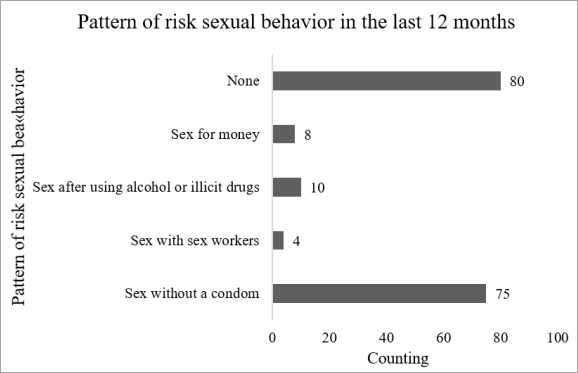
In order to characterize the pattern of risky sexual behavior in the last 12 months, responses corresponding to exposure to risky sexual experiences (sex without a condom, in exchange for money, after using alcohol or illicit drugs and sex with prostitutes) were used and the data is shown in Figure 1. It shows that around 54.8% were exposed to at least one of the situations considered to be a risk for STI infection 75 (42.4%) had sex without a condom, (10) 5.6% after using alcohol or illicit drugs, 8 (4.5%) sex in exchange for money and 4 (2.3%) had sex with prostitutes. The other 45.2% said they had not been involved in any of the situations described here during the period in question.
Figure 1. Pattern of risky sexual behavior among the participants.
Table 4 shows the association between the sociodemographic characteristics of the participants and the frequency of condom use. Of all the sociodemographic variables, only the age group showed a significant association with the frequency of condom use (X2 = 7.881; P - value = 0.028), showing greater inconsistent use in relation to the other age groups.
Table 4. Association between participants' sociodemographic characteristics and frequency of condom use.

Variables

Frequency of condom use

All sexual intercourse n (%)

In some cases of sexual intercourse

Never use

X2

P-value

Gender

Male

13 (7.3)

113 (63.8)

24 (13.6)

10.845

0.406

Female

3 (1.7)

14 (7.9)

10 (5.6)

Age group

Up to 25

0 (0)

1 (0.6)

1 (0.6)

7.881

0.028*

26 to 35

6 (3.4)

80 (45.2)

13 (7.3)

36 to 45

10 (5.6)

45 (25.4)

20 (11.3)

> 45 years

0

1 (0.6)

0 (0.0)

Rank

Private

3 (1.7)

11 (6.2)

3 (1.7)

17.137

0.485

Sergeant

2 (1.1)

39 (22.0)

6 (3.4)

Junior Officer

6 (3.4)

70 (39.5)

22 (3.4)

Senior Officer

5 (2.8)

7 (4.0)

3 (1.7)

Education

Basic

0 (0.0)

0 (0.0)

0 (0:0)

1.435

0.488

Medium

1 (0.6)

23 (13)

30 (16.9)

Higher

15 (8.5)

104 (58.8)

28 (15.8)

Marital status

Single

7 (4.0)

33 (18.6)

3 (1.7)

18.737

0.387

Civil partnership

6(3.4)

53 (29.9)

9 (5.1)

Married

2 (1.1)

38 (21.5)

21 (11.9)

Divorced

1 (0.6)

3 (1.7)

1 (0.6)

Religion

None

1 (0.6)

12 (6.8)

4 (2.3)

4.228

0.135

Christian

14 (7.9)

102 (57.6)

30 (16.9)

Islamic

1 (0.6)

13 (7.3)

0 (0.0)

*Statistically significant (P - value < 0.05).
Table 5 shows the association between the sociodemographic characteristics of the respondents and the presence of signs or symptoms of STI infection, and there was no association between the variables.
Table 5. Association between the sociodemographic characteristics of respondents and the presence of signs or symptoms of STI infection.

Variable

Signs of STI infection

Yes n (%)

No n (%)

X2

P-value

Gender

Male

21 (11.9)

129 (72.9)

0.013

0.911

Female

4 (2.3)

23 (13.0)

Age group

≤ 25

1 (0.6)

1 (0.6)

2.652

0.196

26 to 35

15 (8.5)

84 (47.5)

36 to 45

9 (5.1)

66 (37.3)

> 45 years old

0 (0.0)

1 (0.6)

Rank

Private

2 (1.1)

15 (8.5)

0.111

0.525

Sergeant

7 (4.0)

40 (22.6)

Subaltern Officer

14 (7.9)

84 (47.5)

Senior Officer

2 (1.1)

13 (7.3)

Education

Basic

0 (0.0)

0 (0.0)

0.192

0661

Medium

5 (2.8)

25 (14.1)

Higher

20 (11.3)

127 (71.8)

Marital status

Single

7 (4.0)

36 (20.3)

4.928

0.177

Civil partnership

11 (6.2)

57 (32.2)

Married

5 (2.8)

56 (31.6)

Divorced

2 (1.1)

3 (1.7)

Religion

No religion

1 (0.6)

16 (9.0)

1.834

0.517

Christian

23 (13.0)

123 (69.5)

Islamic

1 (0.6)

13 (7.3)

The chi-square test showed that the presence of signs or symptoms of STI infection had a significant association with the number of partners in the last 12 months (X2 = 12.278; p-value = 0.007), the frequency of condom use (X2 = 6.199; p-value = 0.045) and risky sexual experiences in the last 12 months (X2 = 5.998; p-value = 0.027) and the respective results are shown in table 6.
Table 6. Association between the presence of signs of STI infection and the number of partners in the last 12 months, frequency of condom use and risky sexual experiences in the last 12 months.

Variables

Signs of STI infection

Yes n (%)

No n (%)

X2

P-value

Number of partners in the last 12 months

1 partner

7 (4.0)

70 (39.5)

12.278

0.007*

2 partners

4 (2.3)

21 (11.9)

3 partners

0 (0.0)

19 (10.7)

4 partners

3 (1.7)

16 (16)

More than 4 partners

11 (6.2)

26 (14.7)

Frequency of condom use

In all sexual relations

0 (0.0)

16 (9.0)

6.199

0.045*

In some sexual relations

23 (13)

104 (58.5)

Never used

2 (1.1)

32 (18.1)

Risky sexual experiences

None

7 (4.0)

73 (41.3)

5.998

0.027*

Sex with a prostitute

0 (0.0)

4 (2.3)

Sex for money

1 (0.6)

7 (4.0)

Sex without a condom

16 (9.0)

59 (33.3)

Sex after using alcohol or illicit drugs

1 (0.6)

9 (5.1%)

Statistically significant (P-value < 0.05)
When estimating the odds ratio for the presence of signs or symptoms of STI infection using the multinomial logistic regression model, it was found that although not statistically significant in some cases such as inconsistent condom use, sex for money and sex after using alcohol or illicit drugs, this was increased by 3,538, 1,286 and 2,441 times respectively. Table 7.
Table 7. Multinomial logistic regression model of the odds ratio for the presence of STI infections.

Variables

Coefficient

df

Chance

P - value

Number of partners in the last 12 months

1 partner

-1.442

1

0.236

0.007*

2 partners

-0.798

1

0.450

0.222

3 partners

-21.189

1

6.278E-10

-

4 partners

-0.814

1

0.442

0261

More than 4 partners

0b

-

-

-

Frequency of condom use

In all sexual relations

-19.276

1

4.250E-10

-

In some sexual relations

1.264

1

3.538

0.098

Never used

0b

0

-

-

Risky sexual experiences

None

-0.134

1

0.875

0.906

Sex with a prostitute

-16.852

1

4.802E-8

0.998

Sex for money

0.251

1

1.286

0.867

Sex without a condom

-16.852

1

4.802E-8

-

Sex after using alcohol or illicit drugs

0.892

1

2.441

0.413

4. Discussion
The majority of the subjects in this study were male, with age average of 34.51 years, in the ranks of sergeants and non-commissioned officers, with higher education and among the group living in a de facto union and married.
The dominance of certain characteristics over others is quite remarkable, and may be due to the very characteristics of the military's work. With regard to gender, for example, this can be explained by the restriction on women's access to military careers , and according to the military environment, even though it has undergone recurrent developments in terms of female participation over the last few years, still has exclusionary and prejudiced social configurations, which create some barriers and a lack of interest on the part of women in joining the armed forces. But also, in the case of the Mozambican reality, this may be due to cultural skepticism itself, as women still harbor many myths and taboos when it comes to talking about issues related to sexuality.
Stahlman , in their study on the influence of gender on sexual behavior also found that there was more participation by males than females. This same phenomenon was observed in the study when studying sexually transmitted infections and risky sexual behavior among US Navy and Marine personnel deployed to ships, reinforcing the idea that there is more recruitment into the armed forces of male individuals compared to females.
With regard to the prevalent age groups, they are in line with the majority of the workforce in Mozambique and in the Armed Forces in particular, where the age group between 25 and 45 predominates, and according to these are characteristics that are expressly marked in the military profile.
In several other studies the average age was close to that found in this study, suggesting that it may also be influenced by the average working age in the countries where the research was carried out, which is similar worldwide.
With regard to rank, the predominance of the junior officer class may be due to the fact that they are the ones with the greatest number of subjects with access to information technologies and at an age ʽʽfertileʼʼ to accept participation in research of this kind.
On the other hand, the higher level of education, which was the most observed in this study, shows a great interest in training within the Armed Forces, which favors having a group with a high intellectual capacity to approach political and social issues, including those related to health. However, studies by , who assessed the sexual behavior of American military personnel, and , who assessed American navy and marine personnel, found that the majority of subjects had a secondary level of education.
The high number of cohabiting and married individuals is due to the fact that the majority of subjects are already of childbearing age and culturally and biologically there is a need to live with a spouse. in their study of US Navy and Marine soldiers also found that the majority of subjects were married and in a serious relationship, living with a partner.
Around 97.7% of the subjects in this study said they had more than one sexual partner in their lifetime, 46.9% of whom had had more than 10 partners. Likewise, in the study of . they reported that the majority of the subjects (69.44%) they studied had had more than one sexual partner in their lifetime. This leads us to a generalized exercise of educating the subject from an early age with methods that help to avoid or postpone the beginning of sexual life in order to reduce the number of relationships in life.
Most of the subjects in this study (55.4%) had experienced at least one risky sexual situation. These results corroborate with the findings of where 52% of the participants had risky sexual behavior. also found in a study of sexual behavior and sexually transmitted infections in women that more than 40% had experienced at least one risky situation. An even higher percentage of risky sexual behavior (79.2%) was found by when studying unsafe sexual behavior as a predictor of individual vulnerability to HIV in military personnel from the Brazilian armed forces. In another study, , who assessed risky sexual behavior and compulsive sexual behavior disorders among military personnel in Ibadan (Nigeria), also detected a high prevalence of risky sexual behavior among the respondents (79.6%).
The existence of high rates of individuals with risky sexual behavior requires the development of preventive work, through educational activities, aimed at raising awareness and reducing the risks of STIs . In other studies, such as and , for example, the percentage of individuals considered to have risky sexual behavior was relatively low (14% and 9%) respectively.
Gräf et al. , State that risky sexual behavior has different definitions in the literature, making it difficult to compare outcomes. On the other hand, according to the temporal comparison of research data should consider the possible impact on responses of cultural changes over time, since the same sexual practice, experienced at different times, can be reported more or less frequently depending on cultural contexts that are more or less liberal in relation to the practice at the time in question.
Unprotected sexual intercourse with casual partners constitutes one of the biggest risk factors for contracting sexually transmitted infections . In this survey, 14.1% of respondents reported having had some sign or symptom of STI infection in the last 12 months. This percentage is very high for the estimative of the general Mozambican population. According to the , it indicated a prevalence of STI of 7.1% among women and 7.3% among men aged 15-49 who had had sexual intercourse in the last 12 months.
However, in the study by , whose main objective was to estimate the prevalence and determinants of the occurrence of sexually transmitted infections (STIs) in paratroopers and Navy soldiers, the diagnostic confirmation of STIs was similar to that of the present study, standing to men and women at 13.9% and 11.3% respectively.
Regarding this reality, studies have reported a highly problematic history of sexually transmitted infections in the military, reporting higher rates in the military population compared to the civilian population .
However, , when studying sexually transmitted infections and risky sexual behaviors among US Navy and Marine Corps personnel deployed to ships, found relatively low prevalence values when compared to the present study where among all sexually active participants, STIs were reported by 8.0% of men and 1.6% of women.
Military health managers should therefore pay more attention to developing sex education programs in order to reduce the incidence of STIs and their consequences, since, according to , the military population has a low perception of risk for sexually transmitted diseases and their forms of transmission, even in groups with high levels of education.
The frequency of condom use was significantly associated with age, while no association was observed with the other sociodemographic characteristics, corroborating with this results was found by where older men in their sample, the greater the unsafe exposure to insertive vaginal sex, hypothesizing more objectively that older men with steady partners were more likely to be exposed to unprotected sex.
On the other hand, in the study of , there was no significant association with sociodemographic characteristics such as religion and parental schooling when surveying medical students. Meanwhile, in the study by risky sexual behavior, which includes the frequency of condom use, was associated with certain sociodemographic characteristics such as gender, age at first sexual intercourse and the frequency of alcohol consumption, consumption of psychoactive substances before the last intercourse
The presence of signs or symptoms of STI infection had no significant association with the sociodemographic status of the respondents, however, it had a statistically significant association with the number of partners in the last 12 months, the frequency of condom use and with risky sexual experiences.
With regard to the number of partners in the last 12 months the results of the present study are in line with those found by , where in studying the self-report of STIs and risky sexual behavior in the United States Armed Forces, after adjusting for potential confounding factors, we found that the report of multiple sexual partners was significantly associated with the report of an STI among men.
In a study of college students when examining the weighted proportions of participants with different sociodemographic and behavioral characteristics who engaged in risky sex or consistently risky sex, several characteristics were not associated with any type of risky sexual behavior. Surprisingly, neither the diagnosis of an STI (recent or lifetime) was associated with sociodemographic status.
Corroborating the findings of this study, , when studying sexual behavior and sexually transmitted infections in female convicts, found no association between sociodemographic characteristics and the presence of STI infection; however, they did find an association between the variables number of partners in the last 12 months, sexual violence, money for sex, sex under the influence of alcohol and sex under the influence of drugs, reinforcing the idea that risky sexual behavior can predispose to a higher incidence of STI.
However, the same authors state that the types of sexual behavior may be associated with low levels of education and social vulnerability, as these aspects are directly linked to access to information, negatively influencing awareness and making it difficult to understand how to prevent and treat certain diseases. However, this characteristic not corroborates with the subjects of this study because, as can be seen from their level of education, a large majority of them have completed higher education.
However, the study of suggests that various characteristics may be associated with STI infection, since when they studied unsafe sexual behavior as a predictor of individual vulnerability to HIV in military personnel from the Brazilian armed forces, they found that the sociodemographic variables of age, marital status, years of study, rank and risk behavior, such as alcohol dependence and sexual coercion, were associated with HIV infection, with statistical significance in the bivariate analysis of up to 20%.
In the multinomial logistic regression model, irregular condom use, sex for money and alcohol consumption before sex were predictors of STI infection. in their study with female convicts, also found through the logistic regression model that the variables practicing sex for money and under the influence of alcohol or drugs were strong predictors for sexually transmitted infections, adding to these also women who had a sexual relationship with more than one partner in the last 12 months and who reported having suffered sexual violence
Also in another study by in the multiple logistic regression test, the results suggest that the use of chemical products (which included alcohol, cigarettes, stimulant and other drugs) before sexual intercourse were associated with the risk of HIV/STI infection.
Both the results of this study and reports from other studies highlight the danger of using chemical substances such as alcohol and other legal or illegal drugs before sexual intercourse to increase the risk of risky sexual behavior.
5. Conclusion
As can be seen from the research results and based on the previously formulated objectives, risk sexual behavior was present in the lives of most military personnel, with greater emphasis on sex without a condom and multiple partners, which may largely explain the presence of signs or symptoms of sexually transmitted infections. Furthermore, it was evident in this population, that the educational factor did not influence the improvement of sexual behavior because, despite the majority of subjects having a high level of education, they demonstrated a high rate of risky sexual behavior. However, other characteristics such as sex, age and marital status deserve better clarification regarding their contribution to vulnerability to risky sexual behavior.
In this context, future research with more robust samples that allow greater control of variables should be carried out.
However, sexual education work at the level of military units, accompanied by manuals for personal/individual use, is necessary in order to reduce the levels of risky sexual behavior and consequently reduce the rates of sexually transmitted infections.
Abbreviations

STIs

Sexually Transmitted Infections

HIV

Human Immunodeficiency Virus

AIDS

Acquired Immunodeficiency Syndrome

Acknowledgments
To the Ministry of National Defense of Mozambique for consenting the research being carried out
Author Contributions
Nivaldo António Tomo Chirindza: Conceptualization, Methodology, Validation, Writing Original Draft Preparation, Writing Review & Editing
Lucília Bernardino Marrinze Mangona: Methodology, Validation, Writing Review & Editing
Nelson Raul Uate: Methodology, Validation, Writing - Review & Editing
Funding
No funding was obtained to carry out the research; own funds were used.
Data Availability Statement
Data are available upon request from the corresponding author.
Conflicts of Interest
The authors declare no conflicts of interest.
References
[1] Falcão-Júnior JSP, Rabelo STO, Lopes EM, Freitas LV, Pinheiro AKB, Ximenes LB. Perfil e práticas sexuais de universitários da área da saúde. Esc Anna Nery. 2007; 11(1): 58-65.
[2] Chinazzo, I. R., Câmara, S. G., Frantz, D. G. Comportamento sexual de risco em jovens: aspectos cognitivos e emocionais. Fascículo. Psico-USF 19 (1) 2014 p. 1-12.
[3] LMarques, F. Z. C., Chedid, S. B., Eizerik, G. C. Resposta sexual humana. Revista de Ciências Médicas 2008. v. 17, n. 3-6, p. 175-183.
[4] Oliveira, C. R. F.; Filho E. G. R.; Candido R. C. L.; Souto R. D.; Cassimiro R. D.; Jesus S. B. Comportamento sexual de acadêmicos de medicina de uma instituição de ensino privada do Centro-Oeste brasileiro. Anápolis, Goiás. 2020.
[5] Calazans, G. J.; Pinheiro, T. F.; Ayres, J. R. C. M. Programmatic vulnerability and public care: Overview of HIV and Aids prevention policies for gay and other MSM in Brazil. Sexualidad, Salud y Sociedad, 2018; (29): 263-93.
[6] Damacena, G. N.; Szwarcwald, C. L., DA Motta, L, R., Kato, S, K.; Adami, A. G.; Paganella, M. P.; Pereira, G. F. M.;, Sperhacke, R. D. Retrato do comportamento de risco dos conscritos do Exército brasileiro à infecção pelo HIV por macrorregiões brasileiras, 2016. REV BRAS EPIDEMIOL; 22(SUPPL 1): E190009.Supl. 2019.
[7] Directorate of Force Health Protection. Trends in pre-military sexually transmitted infections and associated risk behaviours in Canadian Armed Forces recruits. Department of National Defence. Canada Communicable Disease Report. Volume 46, Number 9, 2020, pp. 272-278.
[8] Loobya, A., Bravob, A. J., Kilweina, T. M., Zimmermana, L., Pearsonb, M. R.; and Protective Strategies Study Team. Alcohol-related Protective Behavioral Strategies as a Mediator of the Relationship between Drinking Motives and Risky Sexual Behaviors. 2019 June; 93: 1–8.
[9] Ministério da Saúde (MISAU), Direcção Nacional de Saúde Pública, PNC ITS - HIV/SIDA, Plano Estratégico de Acção para a Prevenção e Controlo das Infecções de Transmissão Sexual 2018-2021. Maputo. 2018.
[10] Dell’Aglio, D. D., Koller, S. H., Cerqueira-Santos, E., & Colaço, V. F. Revisando o Questionário da Juventude Brasileira: Uma nova proposta. In D. D. Dell'Aglio & S. H. Koller (Orgs.), Adolescência e juventude: Vulnerabilidade e contextos de proteção. (2011). pp. 259-270. São Paulo: Casa do Psicólogo.
[11] Dourado, C. A. R. O., De Lima, M. C. L., Da Silva, M. A. S., Pinho, C. M., Andrade, M. S. Comportamento sexual inseguro como preditor da vulnerabilidade individual ao HIV em militares das forças armadas brasileiras. REAS. 2024. Vol. 24(5).
[12] Oliveira, A. P., Costa R, P. Transversalização de gênero nas forças armadas brasileiras: uma abordagem multicultural. Revista da Escola Superior de Guerra. 2019. 34 (71): 31-58.
[13] Stahlman, S., Javanbakht, M., Cochran, S., Hamilton, A. B., Shoptaw, S., Gorbach, P. M. Self-Reported STIs and Sexual Risk Behaviors in the U.S. Military: How Gender Influences Risk. Sex Transm Dis. 2014 June; 41(6): 359–364.
[14] Triplett, D. P., Harbertson, J., Hale, B. Sexually transmissible infections and sexual risk behaviour among deployed, ship-assigned USA Navy and Marine Corps personnel. Sex Health. 2021 May; 18(2): 162-171.
[15] Azeez, N., Usman, A. B., Stephen, A. A., Jibo, A. M., Iliyasu, Z. Risky Sexual Behaviour among Male Immigration and Correctional Personnel in Kano State, Nigeria, PREPRINT Research Square. 2018.
[16] Evans, M. W., Borrero, S., Yabes, J., Rosenfeld, E. A. Sexual Behaviors and Sexually Transmitted Infections Among Male Veterans and Nonveterans. Am J Mens Health. 2017 Jul; 11(4): 791-800.
[17] Gottwald, C., Schwarz, N. G., Frickmann, H. Sexually Transmitted Infections in Soldiers – A Cross-Sectional Assessment in German Paratroopers and Navy Soldiers and a Literature Review. European Journal of Microbiology and Immunology. 2019. 4, pp. 138–143.
[18] Nascimento, B. S., Spindola, T., Pimentel, M. R. A. R., Ramos, R. C. A., Costa, R. S., Teixeira, R. S. Comportamento sexual de jovens universitários e o cuidado com a saúde sexual e reprodutiva. Enfermería Global Nº 49 Enero 2018.
[19] Sales, W. B., Caveião, C., Visentin, A., Mocelin, D., Da Costa, P. M., Simm, E. B. Comportamento sexual de risco e conhecimento sobre IST/SIDA em universitários da saúde. Revista de Enfermagem Referência. Série IV - n.° 10 - jul./ago./set. 2016.
[20] Martins DC, Pesce GB, Silva GM, Fernandes CAM. Comportamento sexual e infecções sexualmente transmissíveis em mulheres de apenados. Rev. Latino-Am. Enfermagem. 2018; 26: e3043.
[21] Adetoro, A. A., Adebayo, A. M., Atariata, O. A. Sexual risk behaviours and compulsive sexual behaviour disorders among military personnel in ibadan. Ann Ib Postgrad Med. 2023 Dec; 21(3): 10-19. Epub 2024 Jan 30. PMID: 38706620; PMCID: PMC11065191.
[22] Trepka, M. J., Kim, S. Pekovic, V., Zamor, P., Velez, E., Gabaroni, M. V. High-Risk Sexual Behavior Among Students of a Minority-Serving University in a Community With a High HIV/AIDS Prevalence, Journal of American College Health. 2008. 57:1, 77-84,
[23] Gräf, D. D., Mesenburg, M. A., Fassa, A. G. Comportamento sexual de risco e fatores associados em universitários de uma cidade do Sul do Brasil. Rev Saude Publica. 2020; 54: 41.
[24] Singkun A., Kallawicha K., Yamarat K. Risk of HIV/STIs among Muslim army conscripts in the three deep southern provinces of Thailand. Health Promotion Perspectives, 2021, 11(4), 444-451.
[25] Barbosa R. M.; Koyama M. A. H. Comportamento e práticas sexuais de homens e mulheres, Brasil 1998 e 2005. Rev. Saúde Pública 2008; 42 (Supl 1): 21-33.
[26] Aldous, W. K., Robertson, J. L., Robinson, B. J., Hatcher, C. L., Hospenthal, D. R., Conger, N. G., & Murray, C. K.. Rates of gonorrhea and chlamydia in U.S. military personnel deployed to Iraq and Afghanistan (2004-2009). Military Medicine. 2011. 176, 705-710.
Cite This Article
  • APA Style

    Chirindza, N. A. T., Uate, N. R., Mangona, L. B. M. (2025). Sexual Behavior and Risk of STI Infections in Mozambican Military Personnel. Central African Journal of Public Health, 11(3), 102-112. https://doi.org/10.11648/j.cajph.20251103.12

    Copy | Download

    ACS Style

    Chirindza, N. A. T.; Uate, N. R.; Mangona, L. B. M. Sexual Behavior and Risk of STI Infections in Mozambican Military Personnel. Cent. Afr. J. Public Health 2025, 11(3), 102-112. doi: 10.11648/j.cajph.20251103.12

    Copy | Download

    AMA Style

    Chirindza NAT, Uate NR, Mangona LBM. Sexual Behavior and Risk of STI Infections in Mozambican Military Personnel. Cent Afr J Public Health. 2025;11(3):102-112. doi: 10.11648/j.cajph.20251103.12

    Copy | Download

  • @article{10.11648/j.cajph.20251103.12,
      author = {Nivaldo António Tomo Chirindza and Nelson Raul Uate and Lucilia Bernardino Marrinze Mangona},
      title = {Sexual Behavior and Risk of STI Infections in Mozambican Military Personnel
    },
      journal = {Central African Journal of Public Health},
      volume = {11},
      number = {3},
      pages = {102-112},
      doi = {10.11648/j.cajph.20251103.12},
      url = {https://doi.org/10.11648/j.cajph.20251103.12},
      eprint = {https://article.sciencepublishinggroup.com/pdf/10.11648.j.cajph.20251103.12},
      abstract = {Introduction: The analysis of sexual behavior and the risk of sexually transmitted infections (STIs) among military personnel involves not only understanding factors such as cultural and social norms, but also the specific aspects of the military's work environment. Studies on sexual behavior and practices that seek to better understand the exercise of sexuality within the military are extremely important as they can help guide healthy sexuality practices and develop intervention strategies to prevent and combat STIs. Aim: To analyze sexual behavior and the risks associated with sexually transmitted infections in Mozambican military personnel. Methodology: A total of 177 military personnel of both sexes took part in the study, including officers, sargent and private soldier. The sampling process was snowball type. Data was collected using the Brazilian Youth Questionnaire - Phase II Version (Dell'Aglio et al., 2011), adapted to the reality and objectives of this research, made in the googleform system and sent to the subjects, with the respective explanations and informed consent form for non-identifiable self-administration. Result: The majority of subjects had an active sex life and had been involved in at least one risky sexual practice and 14.1% showed signs or symptoms of STI infection. Risky sexual behavior had a significant association with the presence of signs of STI infection. Irregular condom use, sex for money and sex after drinking were predictors of STI infection. Conclusion: Risk sexual behavior was present in the lives of most military personnel, with greater emphasis on sex without a condom and multiple partners, which may largely explain the presence of signs or symptoms of sexually transmitted infections.
    },
     year = {2025}
    }
    

    Copy | Download

  • TY  - JOUR
    T1  - Sexual Behavior and Risk of STI Infections in Mozambican Military Personnel
    
    AU  - Nivaldo António Tomo Chirindza
    AU  - Nelson Raul Uate
    AU  - Lucilia Bernardino Marrinze Mangona
    Y1  - 2025/06/12
    PY  - 2025
    N1  - https://doi.org/10.11648/j.cajph.20251103.12
    DO  - 10.11648/j.cajph.20251103.12
    T2  - Central African Journal of Public Health
    JF  - Central African Journal of Public Health
    JO  - Central African Journal of Public Health
    SP  - 102
    EP  - 112
    PB  - Science Publishing Group
    SN  - 2575-5781
    UR  - https://doi.org/10.11648/j.cajph.20251103.12
    AB  - Introduction: The analysis of sexual behavior and the risk of sexually transmitted infections (STIs) among military personnel involves not only understanding factors such as cultural and social norms, but also the specific aspects of the military's work environment. Studies on sexual behavior and practices that seek to better understand the exercise of sexuality within the military are extremely important as they can help guide healthy sexuality practices and develop intervention strategies to prevent and combat STIs. Aim: To analyze sexual behavior and the risks associated with sexually transmitted infections in Mozambican military personnel. Methodology: A total of 177 military personnel of both sexes took part in the study, including officers, sargent and private soldier. The sampling process was snowball type. Data was collected using the Brazilian Youth Questionnaire - Phase II Version (Dell'Aglio et al., 2011), adapted to the reality and objectives of this research, made in the googleform system and sent to the subjects, with the respective explanations and informed consent form for non-identifiable self-administration. Result: The majority of subjects had an active sex life and had been involved in at least one risky sexual practice and 14.1% showed signs or symptoms of STI infection. Risky sexual behavior had a significant association with the presence of signs of STI infection. Irregular condom use, sex for money and sex after drinking were predictors of STI infection. Conclusion: Risk sexual behavior was present in the lives of most military personnel, with greater emphasis on sex without a condom and multiple partners, which may largely explain the presence of signs or symptoms of sexually transmitted infections.
    
    VL  - 11
    IS  - 3
    ER  - 

    Copy | Download

Author Information