
 ,
Vignon Bedie,
Clemence Metonnou,
Virginie Mongbo,
Charles Sossa Jerome,
Ghislain Emmanuel Sopoh,
Edgard-Marius Ouendo
,
Vignon Bedie,
Clemence Metonnou,
Virginie Mongbo,
Charles Sossa Jerome,
Ghislain Emmanuel Sopoh,
Edgard-Marius Ouendo
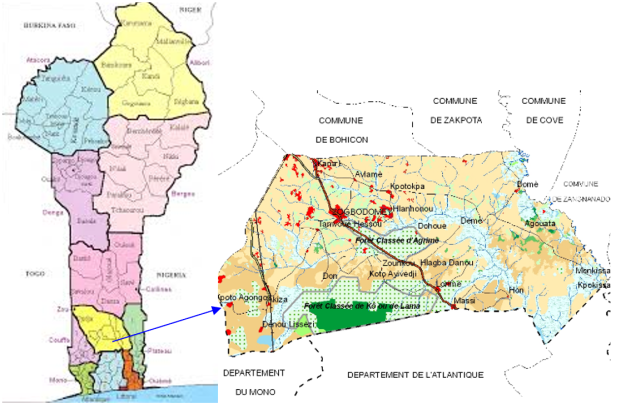
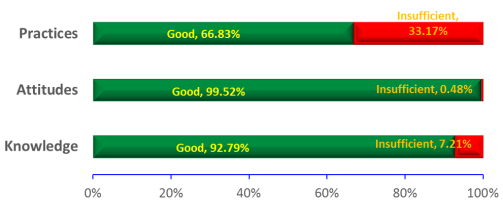
Introduction: Malaria remains a major public health problem in Benin, especially among children under five, despite the implementation of proven prevention and management strategies. Given the persistent malaria burden, this study was conducted to analyse the knowledge and practices of mothers of under-five children regarding malaria, as well as the determinants of formal healthcare-seeking. Methods: This was a cross-sectional analytical study conducted among mothers of under-five children, selected from three villages in the commune of Zogbodomey, Benin. Data collected from mothers using a digitised questionnaire were used to classify knowledge, attitudes and practices as "good" or "insufficient" based on the mean scores obtained. Determinants of healthcare-seeking were explored using univariate and multivariate regression at a 5% significance level. Results: The majority of the 208 mothers (92.79%) had good knowledge about malaria, and 100% exhibited positive attitudes towards its prevention. However, only 66.83% actually adopted good practices. After adjustment, the variables that remained significantly associated with healthcare-seeking were: knowledge of malaria transmission modes (OR= 4.64; 95% CI= [1.03-20.90]), and mother’s occupation such as trader (OR=0.37; 95% CI= [0.18-0.75]), farmer (OR= 0.27; 95% CI= [0.09-0.82]) and craftswoman (OR= 0.23; 95% CI= [0.08-0.65]). Conclusion: Although the overall level of knowledge and attitudes among mothers is satisfactory, it does not yet translate into sustained, positive practices against malaria. Strengthening health education and promoting continuous behavioural support appear essential to enhance malaria control for children under five in Benin.
| Published in | Central African Journal of Public Health (Volume 11, Issue 6) |
| DOI | 10.11648/j.cajph.20251106.21 |
| Page(s) | 420-431 |
| Creative Commons |
This is an Open Access article, distributed under the terms of the Creative Commons Attribution 4.0 International License (http://creativecommons.org/licenses/by/4.0/), which permits unrestricted use, distribution and reproduction in any medium or format, provided the original work is properly cited. |
| Copyright |
Copyright © The Author(s), 2025. Published by Science Publishing Group |
Malaria, Knowledge, Attitude, Practice, Determinant, Children Under Five, Benin
Villages | Number of Inhabitants | Population (children 0-59 months) | Sample Size per Village | Number Surveyed |
|---|---|---|---|---|
ATCHIA | 844 | 172 | 61 | 70 |
DOVOGON | 815 | 157 | 55 | 62 |
ZADO-GAGBE | 1012 | 246 | 87 | 76 |
Total | 2671 | 575 | 203 | 208 |
Variables | Frequency | Proportion (%) | 95% CI Lower - Upper |
|---|---|---|---|
Mother's age (years) | |||
≤ 19 | 11 | 5.29 | 2.93–9.33 |
[20-34] | 177 | 85.10 | 79.53–89.34 |
[35-49] | 20 | 9.62 | 6.26–14.48 |
Mother's marital status | |||
Married/Cohabiting | 208 | 100 | - |
Ethnicity | |||
Fon | 199 | 95.67 | 91.85–97.74 |
Adja | 3 | 1.44 | 0.46–4.41 |
Yoruba | 6 | 2.88 | 1.29–6.31 |
Religion | |||
Animist/ Traditional | 136 | 65.38 | 58.61–71.58 |
Christian | 56 | 26.92 | 21.29–33.41 |
Others* | 16 | 7.69 | 4.74–12.23 |
Education Level | |||
None | 133 | 63.94 | 57.13–70.22 |
Primary | 37 | 17.79 | 13.13–23.64 |
Secondary | 38 | 18.27 | 13.55–24.16 |
Main Occupation | |||
Trader | 85 | 40.87 | 34.33–47.73 |
Housewife | 64 | 30.77 | 24.82–37.42 |
Farmer | 26 | 12.50 | 8.62–17.77 |
Craftswoman | 33 | 15.87 | 11.47–21.53 |
Number of children under five in care | |||
1 | 110 | 52.88 | 46.03–59.62 |
≥ 2 | 98 | 47.12 | 40.37–53.96 |
Participation in BCC activities on malaria | |||
Yes | 159 | 76.44 | 70.14–81.75 |
No | 49 | 23.56 | 18.24–29.85 |
* = None, Muslim | |||
** = Behaviour Change Communication | |||
Variables | Frequency | Proportion (%) | 95% CI Lower - Upper |
|---|---|---|---|
Mothers' knowledge of malaria | |||
Knowledge of signs of uncomplicated malaria | |||
At least two signs | 118 | 56.73 | 49.85–63.35 |
Less than two signs | 90 | 43.27 | 36.64–50.14 |
Known signs of uncomplicated malaria | |||
Fever | 193 | 92.79 | 88.33–95.62 |
Weakness/Asthenia | 7 | 3.37 | 1.60–6.92 |
Vomiting | 70 | 33.65 | 27.51–40.40 |
Refusal to breastfeed | 21 | 10.10 | 6.65–15.03 |
Incessant crying | 3 | 1.44 | 0.46–4.41 |
Others* | 49 | 23.56 | 18.24–29.85 |
Knowledge of signs of severe malaria | |||
At least two signs | 43 | 20.67 | 15.66–26.76 |
Less than two signs | 165 | 79.33 | 73.23–84.33 |
Known signs of severe malaria | |||
Jaundice | 169 | 81.25 | 75.31–86.02 |
Anaemia | 35 | 16.83 | 12.30–22.58 |
Convulsions | 2 | 0.96 | 0.23–3.80 |
Prostration | 23 | 11.06 | 7.43–16.13 |
Others** | 18 | 8.65 | 5.49–13.36 |
Knowledge of causes of malaria | |||
Good | 195 | 93.75 | 89.49–96.35 |
Poor | 13 | 6.25 | 3.64–10.50 |
Known causes of malaria | |||
Mosquito | 195 | 93.75 | 89.49–96.35 |
Sun | 6 | 2.88 | 1.29–6.31 |
Diet | 7 | 3.37 | 1.60–6.92 |
Knowledge of malaria transmission modes | |||
Good | 185 | 88.94 | 83.86–92.56 |
Poor | 23 | 11.06 | 7.43–16.13 |
Known modes of malaria transmission | |||
Mosquito bite | 185 | 88.94 | 83.86–92.56 |
Sun | 17 | 8.17 | 5.12–12.79 |
Don't know | 6 | 2.88 | 1.29–6.31 |
Knowledge of at least one vulnerable group to malaria | |||
Yes | 202 | 97.12 | 93.68–98.70 |
No | 6 | 2.88 | 1.29–6.31 |
Knowledge of preventive measures for malaria | |||
At least two measures | 71 | 34.13 | 27.96–40.89 |
Less than two measures | 137 | 65.87 | 59.10–72.03 |
Known preventive measures | |||
LLINs | 203 | 97.60 | 94.31–99.00 |
Environmental Sanitation | 60 | 28.85 | 23.05–35.42 |
Herbal tea | 31 | 14.90 | 10.65–20.46 |
Mosquito coil | 17 | 8.17 | 5.12–12.79 |
Other*** | 13 | 6.25 | 3.64–10.50 |
Source of information on malaria | |||
Word of mouth | 208 | 100 | - |
Mothers' Attitudes | |||
Perception on the use of LLINs | |||
Effective | 207 | 99.52 | 96.61–99.93 |
Ineffective | 1 | 0.48 | 0.06–3.38 |
Perception of medical care for malaria | |||
Good | 208 | 100 | - |
Practices related to malaria | |||
Use of LLINs | |||
Yes | 184 | 88.46 | 83.31–92.17 |
No | 24 | 11.54 | 7.82–16.68 |
First therapeutic recourse | |||
Self-medication | 145 | 69.71 | 63.07–75.61 |
Health Centre | 63 | 30.29 | 24.38–36.92 |
Malaria treatment used | |||
ACT | 148 | 71.15 | 64.57–76.94 |
Paracetamol | 45 | 21.63 | 16.52–27.80 |
Herbal tea/Quinine | 15 | 7.21 | 4.37–11.66 |
* = Don't know, cough, chills, jaundice, mosquito bite mark | |||
** = Don't know, cough, sore throat, yellow urine, mosquito bite mark | |||
*** = None, food hygiene, vaccination, reduced sun exposure | |||
Variables | Formal healthcare-seeking | Odd Ratio (OR) | 95% CI Lower - Upper | p-value | |
|---|---|---|---|---|---|
Yes n (%) | No n (%) | ||||
Mother's age (years) | |||||
≤ 19 | 5 (45.45) | 6 (54.55) | 3.6 | 0.75–17.12 | 0.107 |
[20-34] | 125 (70.62) | 52 (29.38) | 1.24 | 0.43–3.61 | 0.683 |
[35-49] | 15 (75) | 5 (25) | 1 | – | - |
Religion | |||||
Animist/ Traditional | 93 (68.38) | 43 (31.62) | 1 | – | - |
Christian | 41 (73.21) | 15 (26.79) | 0.79 | 0.39–1.58 | 0.508 |
Others* | 11 (68.75) | 5 (31.25) | 0.98 | 0.32–3.00 | 0.976 |
Education Level | |||||
None | 93 (69.92) | 40 (30.08) | 1 | – | - |
Primary | 26 (70.27) | 11 (29.73) | 0.98 | 0.44–2.18 | 0.968 |
Secondary | 26 (68.42) | 12 (31.58) | 1.07 | 0.49–2.33 | 0.859 |
Main Occupation | |||||
Trader | 64 (75.29) | 21 (24.71) | 0.34 | 0.17–0.70 | 0.003 |
Housewife | 33 (51.56) | 31 (48.44) | 1 | – | - |
Farmer | 21 (80.77) | 5 (19.23) | 0.25 | 0.08–0.75 | 0.014 |
Craftswoman | 27 (81.82) | 6 (18.18) | 0.23 | 0.08–0.65 | 0.005 |
Number of children under five in care | |||||
1 | 70 (63.64) | 40 (36.36) | 1 | – | - |
≥ 2 | 75 (76.53) | 23 (23.47) | 0.53 | 0.29–0.98 | 0.045 |
Participation in BCC activities on malaria | |||||
Yes | 112 (70.44) | 47 (29.56) | 0.86 | 0.43–1.72 | 0.680 |
No | 33 (67.35) | 16 (32.65) | 1 | – | - |
Knowledge of signs of uncomplicated malaria | |||||
At least two signs | 60 (66.67) | 30 (33.33) | 1.28 | 0.71–2.33 | 0.404 |
Less than two signs | 85 (72.03) | 33 (27.97) | 1 | – | - |
Knowledge of signs of severe malaria | |||||
At least two signs | 31 (72.09) | 12 (27.91) | 0.86 | 0.41–1.82 | 0.703 |
Less than two signs | 114 (69.09) | 51 (30.91) | 1 | – | - |
Knowledge of malaria transmission modes | |||||
Good | 124 (67.03) | 61 (32.97) | 5.16 | 1.17–22.74 | 0.030 |
Poor | 21 (91.30) | 2 (8.70) | 1 | – | - |
Knowledge of malaria preventive measures | |||||
At least two measures | 54 (76.06) | 17 (23.94) | 1 | – | - |
Less than two measures | 91 (66.42) | 46 (33.58) | 0.62 | 0.32–1.19 | 0.153 |
*None, Muslim | |||||
BCC: Behaviour Change Communication | |||||
Variables | Formal healthcare-seeking | Odd Ratio (OR) | 95% CI Lower - Upper | p-value | |
|---|---|---|---|---|---|
Yes n (%) | No n (%) | ||||
Knowledge of malaria transmission modes | |||||
Good | 124 (67.03) | 61 (32.97) | 4.64 | 1.03–20.90 | 0.045 |
Poor | 21 (91.30) | 2 (8.70) | 1 | – | - |
Main Occupation | |||||
Trader | 64 (75.29) | 21 (24.71) | 0.37 | 0.18–0.75 | 0.006 |
Housewife | 33 (51.56) | 31 (48.44) | 1 | – | - |
Farmer | 21 (80.77) | 5 (19.23) | 0.27 | 0.09–0.82 | 0.021 |
Craftswoman | 27 (81.82) | 6 (18.18) | 0.23 | 0.08–0.65 | 0.006 |
95% CI | 95% Confidence Interval |
ACT | Artemisinin-based Combination Therapy |
BCC | Behaviour Change Communication |
LLIN | Long-lasting Insecticidal Nets |
OR | Odd Ratio |
| [1] | World Health Organization. World malaria report 2024. Geneva: WHO; 2024. (Accessed 6 October 2025). |
| [2] | Accrombessi M, Akogbeto MC, Dangbenon E, Akpovi H, Sovi A, Yovogan B, et al. Malaria burden and associated risk factors in an area of pyrethroid-resistant vectors in Southern Benin. Am J Trop Med Hyg. 2022; 107(3): 681-8. |
| [3] |
Benin Ministry of Health; National Malaria Control Programme. Provisional report on the evaluation of risk factors impacting health equity in the context of malaria (Malaria Matchbox Benin 2022). Cotonou; 2023. Available from:
https://www.clintonhealthaccess.org/wp-content/uploads/2024/05/Rapport_MMB-Benin_INACES_PNLP_version-AVANCEE_220923.pdf (Accessed 14 October 2025). |
| [4] | Issiaka D, Barry A, Traore T, Diarra B, Cook D, Keita M, et al. Impact of seasonal malaria chemoprevention on hospital admissions and mortality in children under 5 years of age in Mali. Malar J. 2020; 19: 103. |
| [5] | Setondji GRP, Badirou A, Georgia D, Medesse TV, Elisette D, Estelle C, et al. Women’s sociodemographic and gyneco-obstetrical factors related to IPTp observance in Benin. Cent Afr J Public Health. 2020; 6(6): 351-8. |
| [6] | Taremwa IM, Ashaba S, Kyarisiima R, Ayebazibwe C, Ninsiima R, Mattison C. Treatment-seeking and uptake of malaria prevention strategies among pregnant women and caregivers of children under five in Uganda during COVID-19. BMC Public Health. 2022; 22(1): 373. |
| [7] | World Health Organization - Benin Country Office. Annual report 2024. Cotonou: WHO; 2025. (Accessed 14 October 2025). |
| [8] | Yovogan B, Djenontin A, Akogbeto MC, Sovi A, Adoha CJ, Fassinou A, et al. Impact of dual-active ingredient LLINs on insecticide-resistant Anopheles gambiae in Southern Benin. Malar J. 2025; 24: 72. |
| [9] | Djogbenou L. Vector control against malaria and vector resistance to insecticides in Africa. Med Trop. 2009; 69: 160-4. |
| [10] | Maslove DM, Mnyusiwalla A, Mills EJ, McGowan J, Attaran A, Wilson K. Barriers to effective malaria treatment and prevention in Africa. BMC Int Health Hum Rights. 2009; 9: 26. |
| [11] | Yadouleton AW, Padonou G, Asidi A, Moiroux N, Bio-Banganna S, Corbel V, et al. Insecticide resistance in Anopheles gambiae in Southern Benin. Malar J. 2010; 9: 83. |
| [12] | Hessou-Djossou D, Djegbe I, Loko YLE, Boukari MKYG, Nonfodji OM, Tchigossou G, et al. Attitudes and prevention towards malaria during COVID-19 in urban Benin. Malar J. 2023; 22(1): 228. |
| [13] | Padonou GG, Gbenoudon JG, Osse R, Salako A, Kpanou C, Sagbohan H, et al. Knowledge-Attitudes-Practices about malaria in Southern Benin. Int J Public Health Sci. 2018; 7(3): 186. |
| [14] |
Republic of Benin; Commune Start-up Support Programme. Monograph of the Zogbodomey Commune. April 2006. Available from:
https://fr.scribd.com/document/428087682/Monographie-de-ZOGBODOMEY (Accessed 6 October 2025). |
| [15] | Benin Ministry of Health. Zogbodomey-Bohicon-Zakpota Health Zone. Annual Health Statistics Yearbook 2023. Bohicon; May 2024. (Accessed 6 October 2025). |
| [16] | Tangi LN, Ajonina MU, Moyeh MN, Chi HF, Ntui VN, Kwi PN, et al. Knowledge, attitude, adherence to malaria guidelines and Plasmodium prevalence in Cameroon. Front Public Health. 2023; 11: 1060479. |
| [17] | Ngasala B, Mwaiswelo RO, Chacky F, Molteni F, Mohamed A, Lazaro S, et al. Malaria knowledge, attitude and practice in Tanzanian districts. Front Public Health. 2023. |
| [18] | Kniffo IR, Agbo-Ola L, Issifou S, Massougbodji A. Mothers of children under five and malaria in the Dangbo valley (South-East Benin). Med Afr Noire. 2000; 47(1). (Accessed 6 October 2025). |
| [19] |
National Institute of Statistics and Economic Analysis (INSAE). MICS - Recognition of malaria danger signs. Benin Data Portal. Available from:
https://benin.opendataforafrica.org/mfsquu/... (Accessed 14 October 2025). |
| [20] | Adum P, Agyare VA, Owusu-Marfo J, Agyeman YN. Knowledge, attitude and practices of malaria prevention among Ghanaian mothers. Malar J. 2023; 22: 268. |
| [21] | Lendongo Wombo JB, Mbani Mpega Ntigui CN, Oyegue-Liabagui LS, Ibinga E, Maghendji-Nzondo S, et al. Childhood malaria knowledge and practices in Gabon. Malar J. 2023; 22: 155. |
| [22] | Addis D, Gebeyehu Wondmeneh T. Assessment of malaria prevention knowledge, attitude, and practice and associated factors among households living in rural malaria-endemic areas in the Afar Pastoral Region of Ethiopia. Frontiers in Public Health. Octobre 2023; 1: 1258594. |
APA Style
Salami, L., Bedie, V., Metonnou, C., Mongbo, V., Jerome, C. S., et al. (2025). Analysis of Knowledge, Practices and Determinants of Formal Healthcare-seeking for Malaria Among Mothers of Children Under Five in Benin in 2023. Central African Journal of Public Health, 11(6), 420-431. https://doi.org/10.11648/j.cajph.20251106.21
ACS Style
Salami, L.; Bedie, V.; Metonnou, C.; Mongbo, V.; Jerome, C. S., et al. Analysis of Knowledge, Practices and Determinants of Formal Healthcare-seeking for Malaria Among Mothers of Children Under Five in Benin in 2023. Cent. Afr. J. Public Health 2025, 11(6), 420-431. doi: 10.11648/j.cajph.20251106.21
AMA Style
Salami L, Bedie V, Metonnou C, Mongbo V, Jerome CS, et al. Analysis of Knowledge, Practices and Determinants of Formal Healthcare-seeking for Malaria Among Mothers of Children Under Five in Benin in 2023. Cent Afr J Public Health. 2025;11(6):420-431. doi: 10.11648/j.cajph.20251106.21
@article{10.11648/j.cajph.20251106.21,
  author = {Lamidhi Salami and Vignon Bedie and Clemence Metonnou and Virginie Mongbo and Charles Sossa Jerome and Ghislain Emmanuel Sopoh and Edgard-Marius Ouendo},
  title = {Analysis of Knowledge, Practices and Determinants of Formal Healthcare-seeking for Malaria Among Mothers of Children Under Five in Benin in 2023},
  journal = {Central African Journal of Public Health},
  volume = {11},
  number = {6},
  pages = {420-431},
  doi = {10.11648/j.cajph.20251106.21},
  url = {https://doi.org/10.11648/j.cajph.20251106.21},
  eprint = {https://article.sciencepublishinggroup.com/pdf/10.11648.j.cajph.20251106.21},
  abstract = {Introduction: Malaria remains a major public health problem in Benin, especially among children under five, despite the implementation of proven prevention and management strategies. Given the persistent malaria burden, this study was conducted to analyse the knowledge and practices of mothers of under-five children regarding malaria, as well as the determinants of formal healthcare-seeking. Methods: This was a cross-sectional analytical study conducted among mothers of under-five children, selected from three villages in the commune of Zogbodomey, Benin. Data collected from mothers using a digitised questionnaire were used to classify knowledge, attitudes and practices as "good" or "insufficient" based on the mean scores obtained. Determinants of healthcare-seeking were explored using univariate and multivariate regression at a 5% significance level. Results: The majority of the 208 mothers (92.79%) had good knowledge about malaria, and 100% exhibited positive attitudes towards its prevention. However, only 66.83% actually adopted good practices. After adjustment, the variables that remained significantly associated with healthcare-seeking were: knowledge of malaria transmission modes (OR= 4.64; 95% CI= [1.03-20.90]), and mother’s occupation such as trader (OR=0.37; 95% CI= [0.18-0.75]), farmer (OR= 0.27; 95% CI= [0.09-0.82]) and craftswoman (OR= 0.23; 95% CI= [0.08-0.65]). Conclusion: Although the overall level of knowledge and attitudes among mothers is satisfactory, it does not yet translate into sustained, positive practices against malaria. Strengthening health education and promoting continuous behavioural support appear essential to enhance malaria control for children under five in Benin.},
 year = {2025}
}
TY  - JOUR
T1  - Analysis of Knowledge, Practices and Determinants of Formal Healthcare-seeking for Malaria Among Mothers of Children Under Five in Benin in 2023
AU  - Lamidhi Salami
AU  - Vignon Bedie
AU  - Clemence Metonnou
AU  - Virginie Mongbo
AU  - Charles Sossa Jerome
AU  - Ghislain Emmanuel Sopoh
AU  - Edgard-Marius Ouendo
Y1  - 2025/12/24
PY  - 2025
N1  - https://doi.org/10.11648/j.cajph.20251106.21
DO  - 10.11648/j.cajph.20251106.21
T2  - Central African Journal of Public Health
JF  - Central African Journal of Public Health
JO  - Central African Journal of Public Health
SP  - 420
EP  - 431
PB  - Science Publishing Group
SN  - 2575-5781
UR  - https://doi.org/10.11648/j.cajph.20251106.21
AB  - Introduction: Malaria remains a major public health problem in Benin, especially among children under five, despite the implementation of proven prevention and management strategies. Given the persistent malaria burden, this study was conducted to analyse the knowledge and practices of mothers of under-five children regarding malaria, as well as the determinants of formal healthcare-seeking. Methods: This was a cross-sectional analytical study conducted among mothers of under-five children, selected from three villages in the commune of Zogbodomey, Benin. Data collected from mothers using a digitised questionnaire were used to classify knowledge, attitudes and practices as "good" or "insufficient" based on the mean scores obtained. Determinants of healthcare-seeking were explored using univariate and multivariate regression at a 5% significance level. Results: The majority of the 208 mothers (92.79%) had good knowledge about malaria, and 100% exhibited positive attitudes towards its prevention. However, only 66.83% actually adopted good practices. After adjustment, the variables that remained significantly associated with healthcare-seeking were: knowledge of malaria transmission modes (OR= 4.64; 95% CI= [1.03-20.90]), and mother’s occupation such as trader (OR=0.37; 95% CI= [0.18-0.75]), farmer (OR= 0.27; 95% CI= [0.09-0.82]) and craftswoman (OR= 0.23; 95% CI= [0.08-0.65]). Conclusion: Although the overall level of knowledge and attitudes among mothers is satisfactory, it does not yet translate into sustained, positive practices against malaria. Strengthening health education and promoting continuous behavioural support appear essential to enhance malaria control for children under five in Benin.
VL  - 11
IS  - 6
ER  -
Health Policy and Systems Department of Regional Institute of Public Health, University of Abomey-Calavi, Ouidah, Benin
Health Policy and Systems Department of Regional Institute of Public Health, University of Abomey-Calavi, Ouidah, Benin
Health Promotion Department of Regional Institute of Public Health, University of Abomey-Calavi, Ouidah, Benin
Health Policy and Systems Department of Regional Institute of Public Health, University of Abomey-Calavi, Ouidah, Benin
Health Promotion Department of Regional Institute of Public Health, University of Abomey-Calavi, Ouidah, Benin
Environmental Health Department of Regional Institute of Public Health, University of Abomey-Calavi, Ouidah, Benin
Health Policy and Systems Department of Regional Institute of Public Health, University of Abomey-Calavi, Ouidah, Benin



 Share This Article
 Twitter
 Linked In
 Facebook
 Copy
Copy Download